Challenge
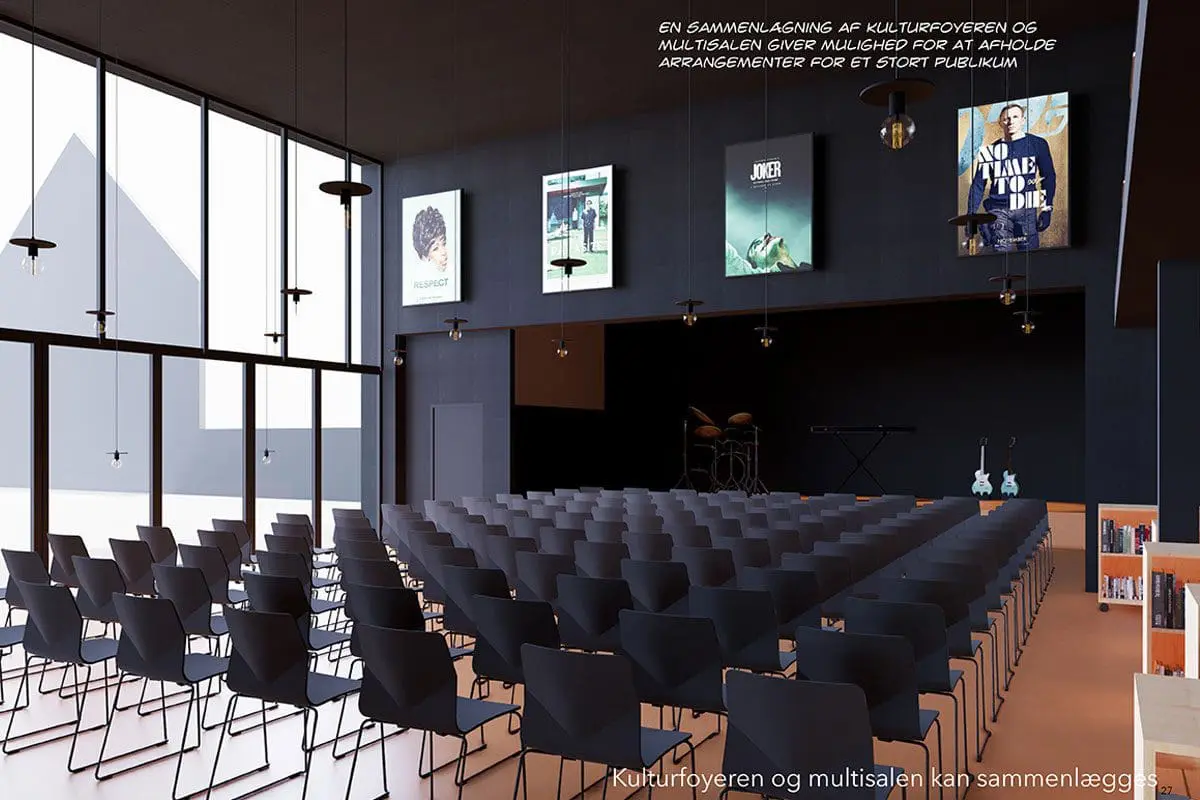
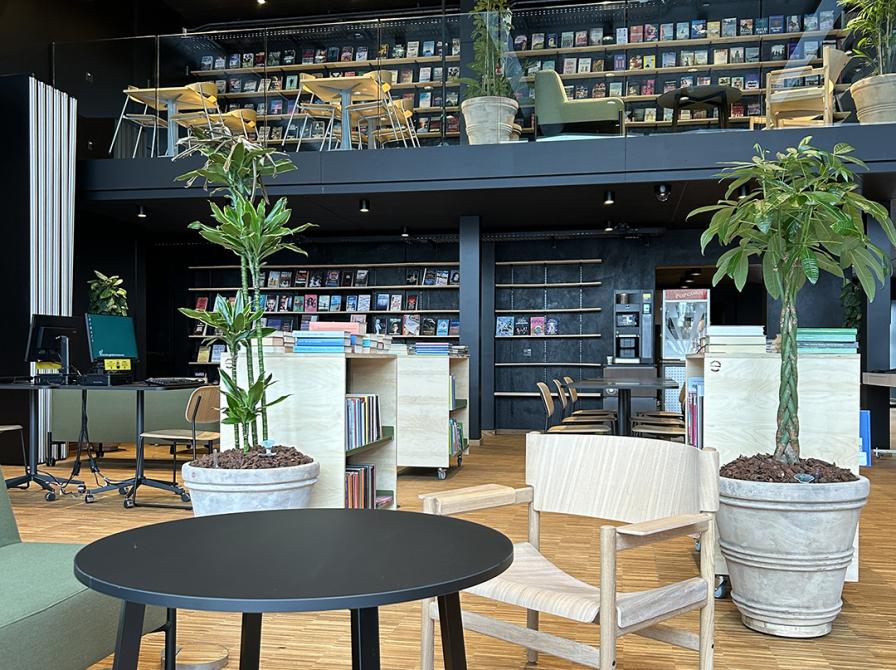
The need for a bigger cinema became the impetus for thinking bigger in Vamdrup. The desire for an additional floor opened up the possibility of creating a common cultural center that could bring the city together and provide a framework for new communities.
The ambition was therefore not only to expand the cinema, but to create a place where citizens, associations and activities could meet across the board — and contribute to the development of the city. It required a new way of thinking both building and collaborating. Library and Kino were to not only share an address, but create something together.
The basic challenge was:
How do you create a shared ownership house where employees, volunteers and citizens alike feel at home?
Process and solution
The run-up to Our House began with the wish of the Association Vamdrup Kino for an additional cinema hall. That led the municipality's politicians to see a bigger opportunity: could library and cinema be thought together in a common cultural house that strengthens the city?
The first step was therefore to investigate whether it could be realized — economically and in practice — to create a common foundation for the project.
Stage 1: Designing the house
Vamdrup Kino, an association of consisting of about 50 volunteers, and Kolding Municipality decided to go to the task focusing on curiosity, inquiry and close dialogue. Together with an architectural firm, the possibilities of a common house of culture were uncovered.
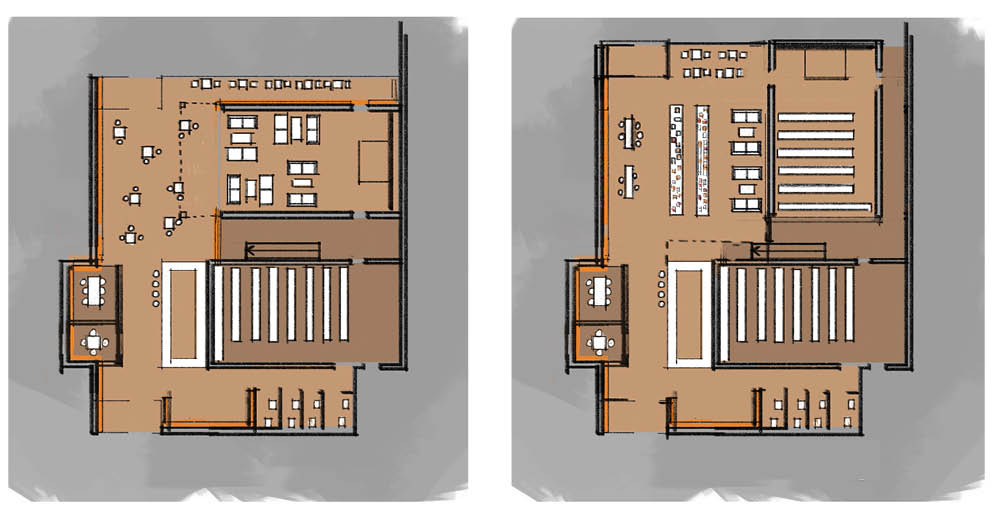
The process was based on the Kino Group's vision and wishes from a strategy seminar. These were taken into the working group and became the starting point for the architect's initial work. The architect presented reference projects, collected feedback and continuously developed proposals that could meet the needs within the economic framework.
A key gripe was to think double exploitation of the square metres. Objections and reservations were taken seriously, and work was ongoing to test and pressure-test challenges and solutions.
The process resulted in an outline, which was politically approved.
Phase 2: Establishment of cooperation agreement
The design process for the physical design of the house made clear the need for equal cooperation between two different cultures: the library was part of the municipality, while the Kino group was volunteer-run and accustomed to self-determination.
Therefore, the parties established a cooperation agreement with
Differences in resources were addressed, among other things, by converting volunteers' hours into economic value.
Stage 3: Creating Life in the House
When the house was finished, work began on creating life.
The library changed its role and today sees itself as a framer rather than a provider of activities.
At the same time, a staff member responsible for supporting life and commitment in the house was hired. She works with a distinct design-driven approach, starting with understanding the city, relationships and existing communities. Instead of creating activities herself, she seeks out citizens, listens to their ideas and helps them develop and realize them. She identifies opportunities, connects people and supports new communities until they can stand on their own two feet.
Today, the house accommodates both established and informal communities — from breakfast café, chess club and reading groups to lectures and concerts. And several new initiatives are already in the pipeline. At the same time, the Kino Group has expanded its activities, and the interaction between library, cinema and volunteers creates a distinct synergy.
Results
Our House was inaugurated in January 2024 and today is a vibrant gathering point in Vamdrup, where activity and community take up much more than before. About 15 established communities and as many informal groups use the house, and approximately 50 volunteers are affiliated.
The collaboration between the library and the Kino group has created strong synergies and significantly increased the level of activity — also in the cinema, which today has more visitors.
Our house has become more than a building. It is a platform where citizens increasingly take ownership and create new initiatives and communities in the city.