Challenge
With the adoption of a new sustainability policy in 2024, Kolding Municipality set a clear direction: Sustainability must be a basic condition in the task solution — not a supplement.
Action had to be created locally and at the same time a broad movement had to be initiated within the organisation.
It raised a key question:
How do you translate a political ambition into concrete action in a busy everyday life across many different departments?
Process and solution
The Municipality of Kolding therefore initiated a two-year internal courcse— Sustainable change — focusing on creating small, concrete changes close to the operation and in the core task.
The course is built around recurring half-year courses, where each department works with 2-3 micro-operations at a time. Over time, this means that each department implements 10-12 minor changes.
The approach is based on the idea of social tipping points: when a sufficient proportion of the organization changes behavior, it begins to spread by itself. The goal is to get 40 departments through the process.
The work of the individual departments follows three stages:
1. Strategy Day
A department head and a sustainability coordinator map out how the department already works with sustainability. They assess their efforts and identify where there is potential for improvement.
2. Development workshop
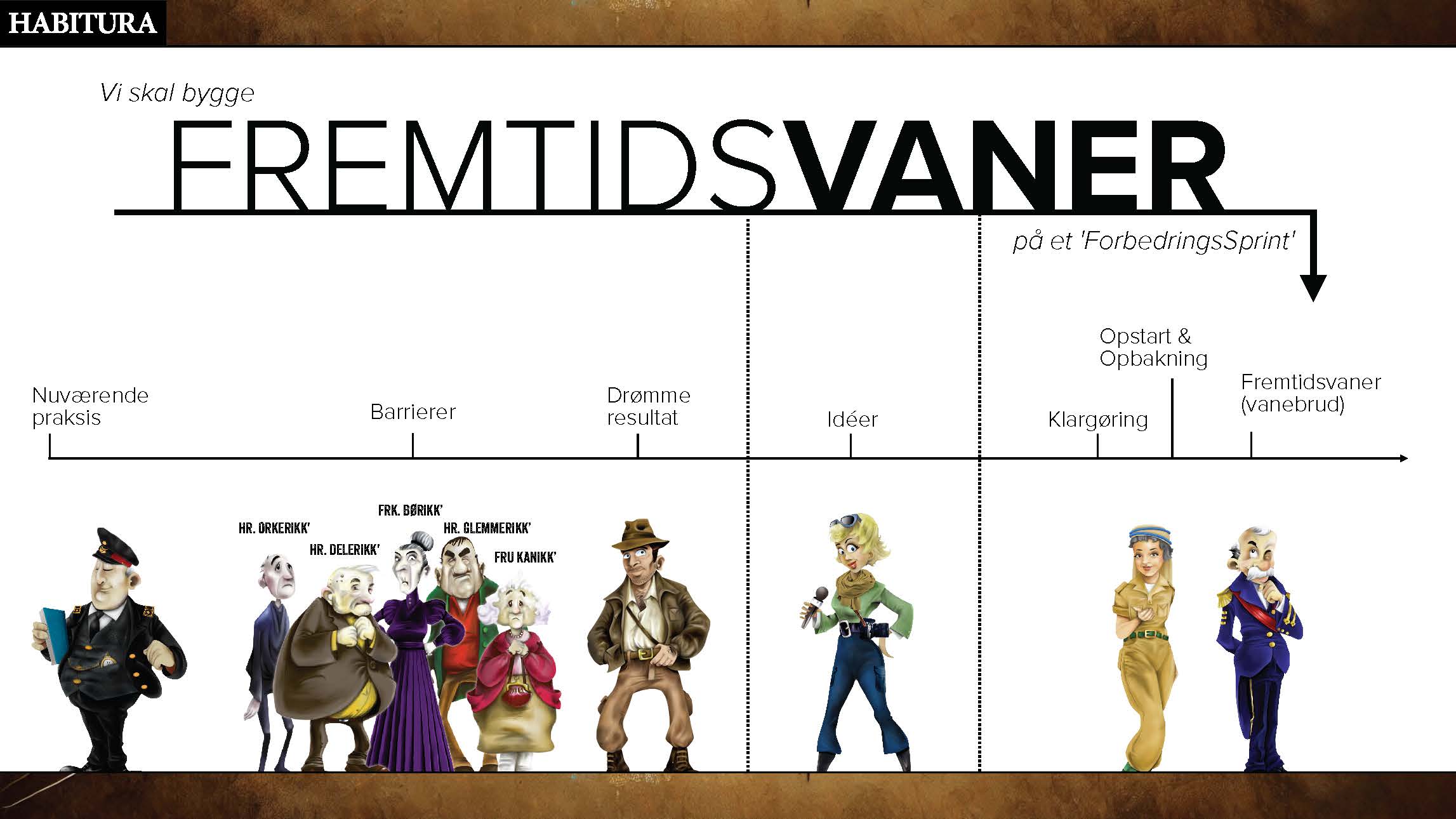
A month later, the coordinator gathers a team around him—these can be colleagues, collaborators or other relevant stakeholders. Together, they select three micro-actions and work with them through short design sprints.
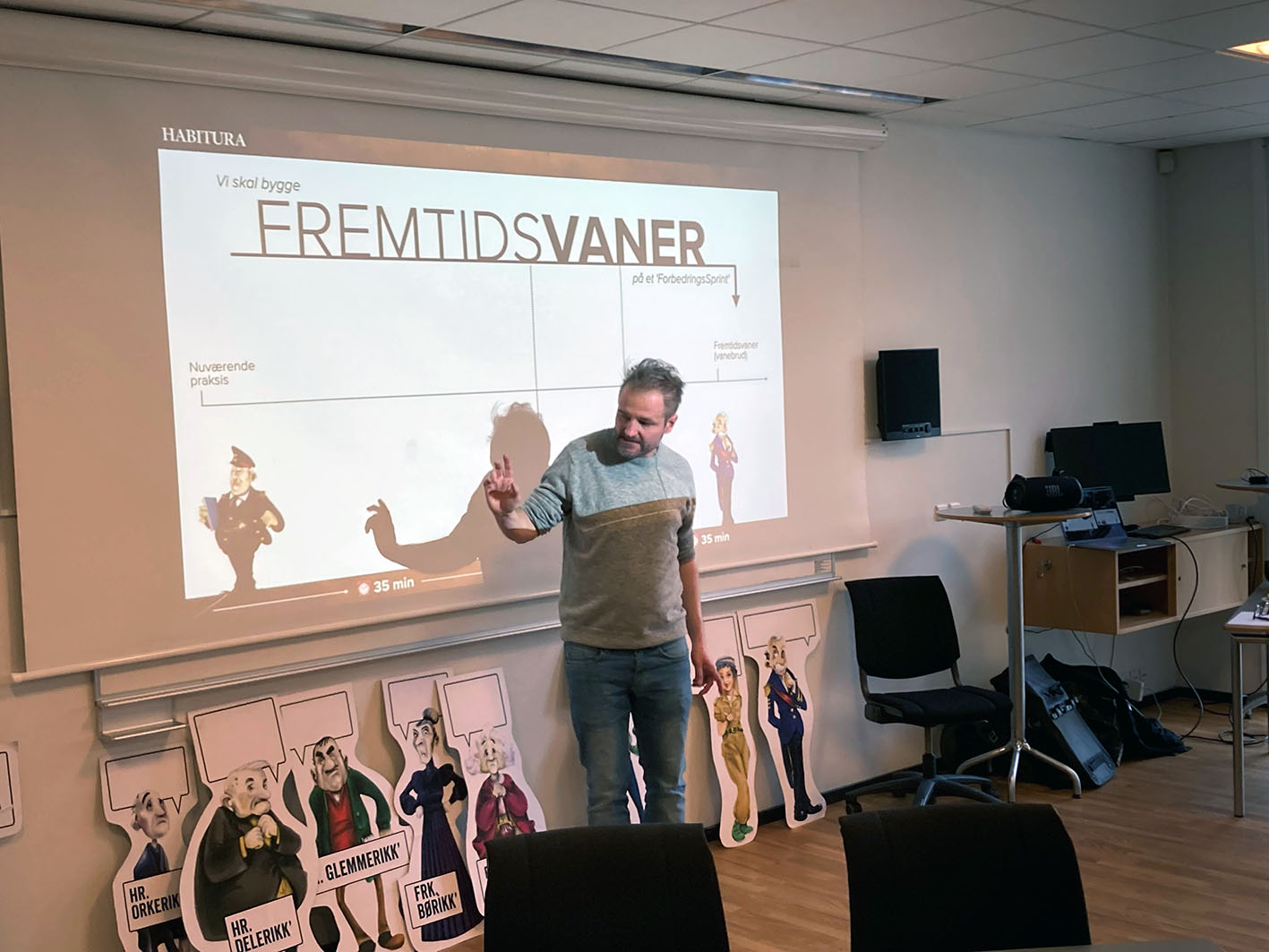
Here, the participants work both to imagine new habits and to find their way there. Creative grips and design constraints are used- like thinking “how would a completely different type of person solve this task?” It helps to open up new perspectives.
3. Coordinator check
After this, the coordinators meet once a month across departments. Here they share experiences, spar with each other and get support from the project management to move forward with their initiatives.
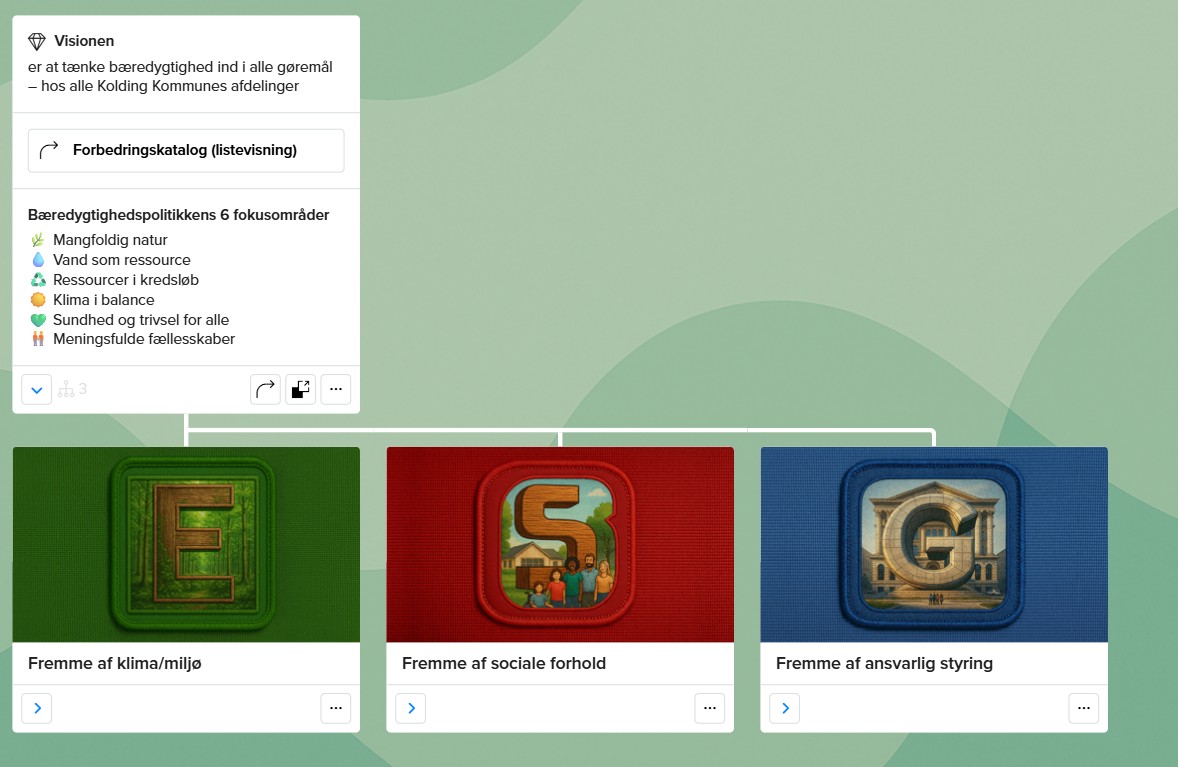
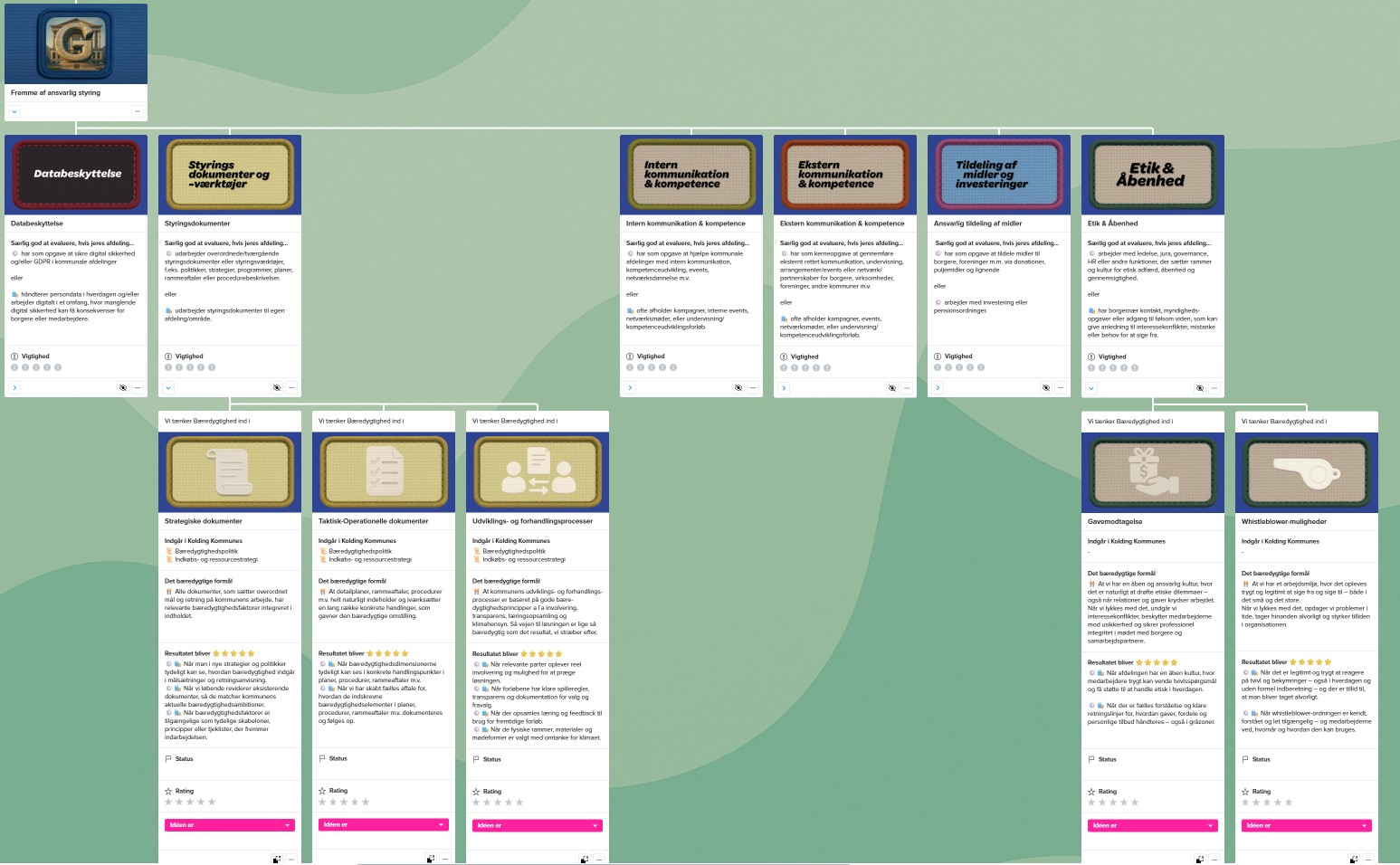
The course is supported by a common digital platform where departments work, share and document their efforts.
At the same time, the entire process is built with simple and visual design grips that make it easy to work with complex issues. For example, personas are used to illustrate habit barriers, helping employees put behavioral theory into practice.
Following a successful trial in 2025, the Executive Board has chosen to extend and strengthen the course. The next round is now underway — both with new departments whichis being onboarded for the project and with the departments that started in the project in autumn 2025, which will initiate 3 new micro-actions.
As of April 1th 2026, 12 departments are in the course and the first 42 micro-actions have been initiated.
Results
The course has given the departments concrete tools to work with sustainability in their own practices. At the same time, experience points to the fact that working with small actions changes the way employees think and make decisions in everyday life.
Measurements show increased knowledge, commitment and power of action in the participating departments.
It is this potential that has led to the Executive Board choosing to invest further in the course with the ambition of reaching 40 departments — thus creating a broad movement towards more sustainable practices throughout the municipality.