Challenge
Kolding has a strong design tradition and an ambition to work with design as an approach to creating value for citizens and society.
Design is part of Kolding's identity, but it only tells a small part about what Kolding is. Who are our citizens, what defines our communities and meeting places? And how does nature and surroundings influence Kolding's identity?
The question was therefore:
How can design be used as a co-creative approach to explore and flesh out Kolding's identity — across citizens, communities, meeting places and surroundings?
Process and solution
Design School Kolding and Kolding Municipality have together created Koldingstolene, a unique community project.
The project began with a simple thought: Everyone has a chair, so why not let citizens help design them? The aim was to investigate what makes Kolding as a municipality special to those who live here. From tales of industrial history to the small, daily meetings of the city buses, each story has contributed to the design of the chairs.
The process was organized as an open and experimental design process with a clear focus on co-creation. Design School Kolding facilitated the process and brought classic design approaches into play — from exploration to design and prototyping.
The work was based on a series of involving activities where citizens were invited to participate as co-creators.
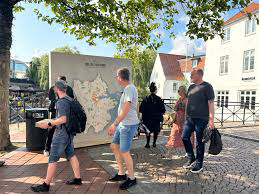
This was done, among other things, through dialogue walls that were set up in different places in Kolding Municipality, for example for Kulturnatt, so that citizens could interact with them. The aim was to get inputs to places that citizens had a special connection to or found unique.
This anthropological study of Kolding Municipality was qualified by experts. Here, among other things, Kolding Stadsarkiv was involved in the history of the city. In addition, a nature guide told about Kolding's unique moraine landscape and how it has been shaped through time. Special important locations such as Koldinghus and Skamlingsbanken were visited, and are also both represented in one or more of the chairs.
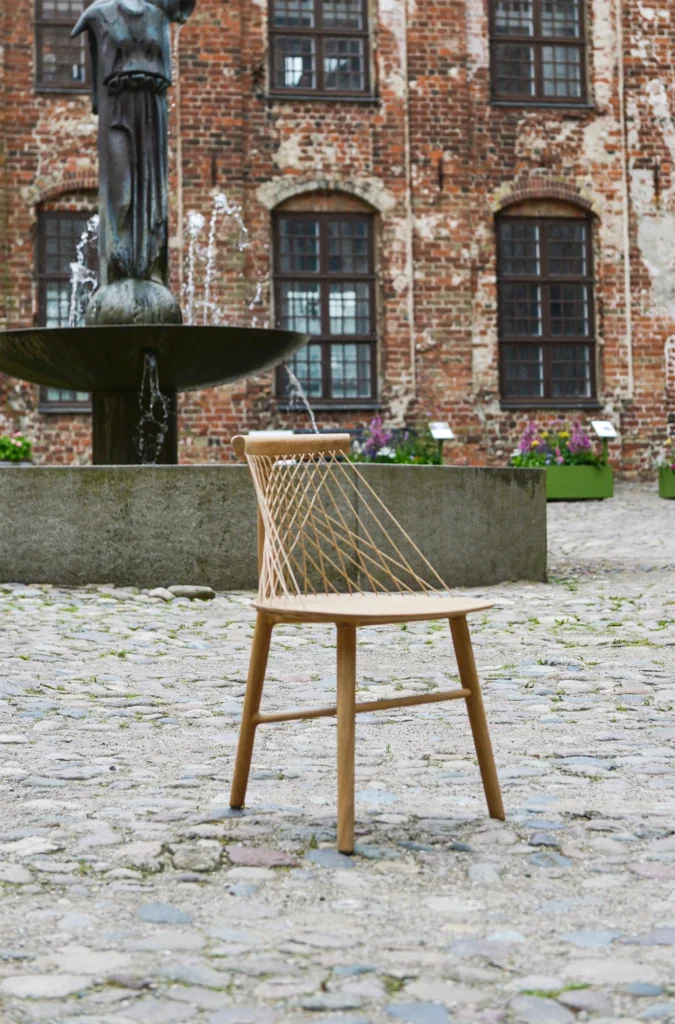
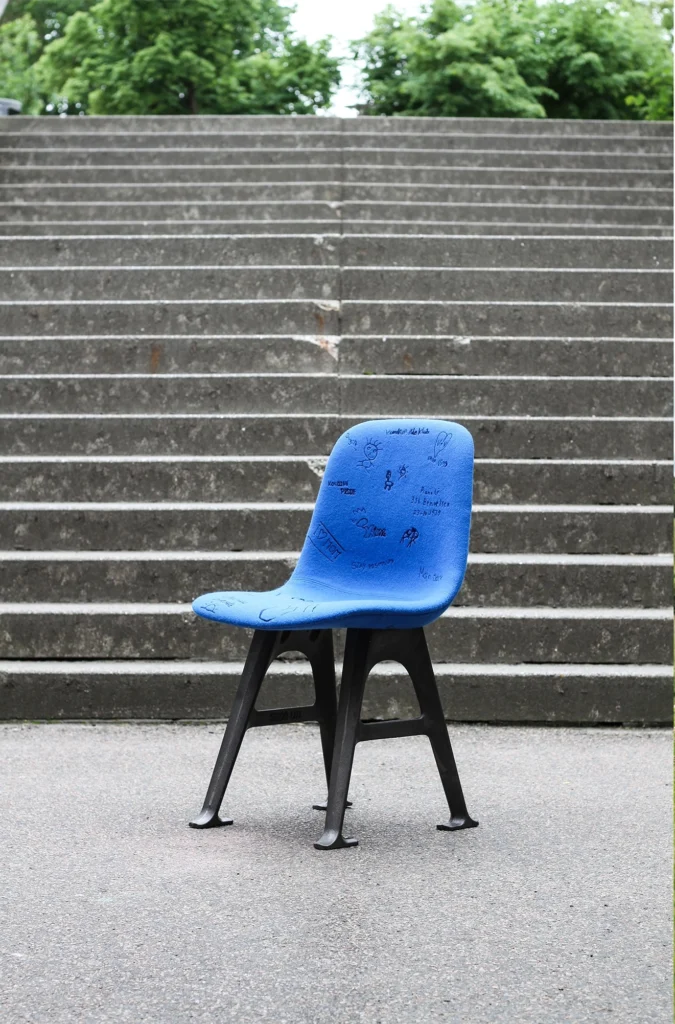
Citizen input was actively translated into the design. Their experiences, preferences and ideas were fleshed out through sketches, models and physical prototypes. The result was three different Kolding chairs — developed as concrete responses to the insights and ideas that emerged in the co-creation process:
Link to the movie about the chairs: Here
Common to the three chairs is that they have been developed through an open process, in which function, form and use have been created in interaction between citizens and design professionals.
The chairs thus act as concrete manifestations of a design approach, where solutions are created through involvement, testing and shared ownership.
Results
The cooling chairs have been presented at 3 Days of Design in 2024. Since then, they have been exhibited in various places in the country, as well as Kolding Municipality. The Kolding Chairs show how design can be used as an approach to engage and bring people together around something common.
The project has:
At the same time, the project points forward by demonstrating how design methods can be used to work with complex and common challenges — not by defining the solution in advance, but by developing it jointly.
The Koldingstolene is thus both a result and a starting point: an example of how design can create connections between people and provide new perspectives on what we can create together.