Challenge
A growing group of citizens experience stress, anxiety and depression, which makes it difficult to maintain attachment to everyday life and work. At the same time, experience shows that traditional forms of health efforts are not always sufficient for all citizens.
Kolding Municipality therefore wanted to investigate new roads:
How can nature be used as an active part of a health effort — and how can we develop an offer that is both scientifically based, meaningful for citizens and rooted in their needs?
At the same time, the ambition was not only to establish a health effort, but to develop an approach in which research, practice and citizen perspectives play together.
Process and solution
Together with the University of Copenhagen and several external foundations, including TrygFonden and the Outdoor Recreation Council, Kolding Municipality set out to solve this task.
The development of Terapihaven Møllebæk was organised as a multi-phase and knowledge-based process, involving citizens, professionals and researchers alike. The work was based on an approach inspired by The Citizen's Centre and design, where the focus is to understand the citizen's situation, the pre-solution is defined.
Phase 1: Insight — understanding needs and potential
In the first phase, work was carried out to achieve a deep understanding of the target audience and their needs. Here, citizens and relevant actors were involved to qualify how nature could play a role in health efforts.
Simultaneously, existing knowledge was incorporated, specifically research from the University of Copenhagen’s Nacadia, a therapy garden with a long history of nature-based therapy.
This phase provided the basis for identifying key principles for both health interventions and the physical environment.
Phase 2: Co-creation — garden and method development
In the next phase, insights were translated into concrete solutions through a co-creation process.
Here professionals, designers and researchers worked together with fellow citizens to develop both the physical design of the garden and the therapeutic activities and courses
The development was based on principles from evidence-based health design, where the qualities of nature are deliberately used as part of health efforts.
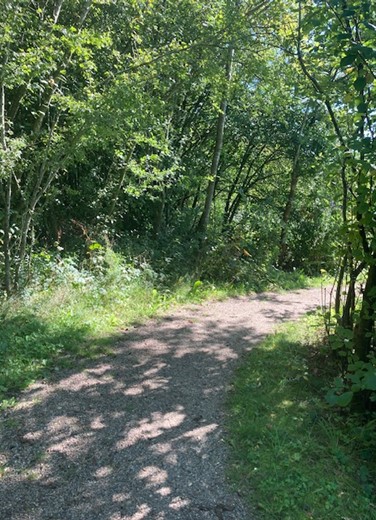
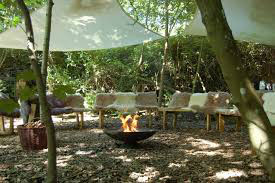
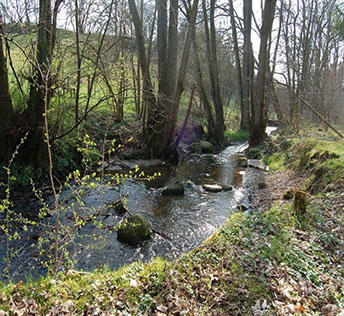
Among other things, work was done to create different types of natural environments that support different needs — for example, quiet and safe spaces, more open and sensual areas and places with opportunities for boating community and immersion
The first citizenship courses were launched in the summer of 2016. Citizens contributed experiences and feedback along the way, which was used to qualify content and frameworks.
The process was iterative, with solutions continually being trialled and adjusted.
Phase 3: Implementation — from project to practice
In the final phase, the effort was anchored as a concrete effort.
Here work was carried out on the establishment of the garden and the adaptation of the forest as a physical place, the organization of courses for the citizens and the development of competences of the employees.
The employees have been upgraded through close collaboration with research environments, especially the University of Copenhagen, where knowledge about nature-based therapy has been put into practice. Competency development has focused on theories about the importance of nature for mental health, the development of health-promoting natural environments, and the employees have continuously tested and adjusted their practices in interaction with citizens — an approach that is close to the iterative design approach.
At the same time, a systematic approach to evaluation was established, in which both qualitative and quantitative methods are used.
The garden has since been further developed continuously, where lessons learned from practice continue to be used to adjust and improve efforts.
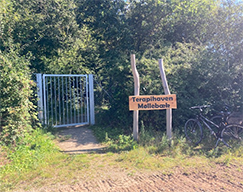
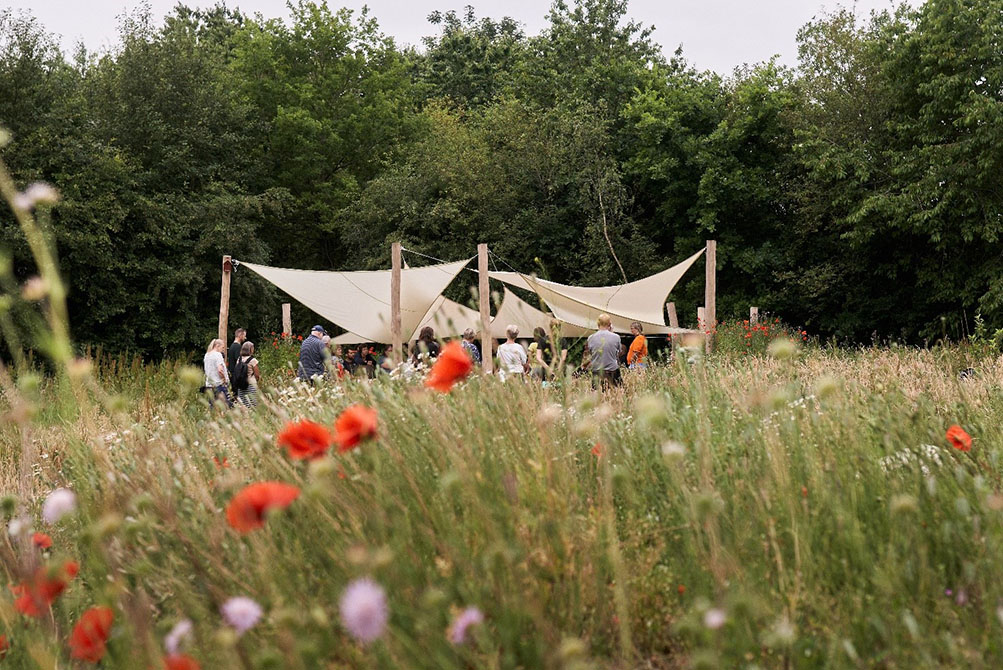
In the summer of 2022, Terapihaven Møllebæk was officially inaugurated. Terapihaven is a nature-based health effort for citizens with symptoms such as stress, anxiety and depression.
The offer combines:
Citizens participate in structured courses where activities in and interaction with nature are actively used to work with both mental and physical well-being.
The solution is thus not just a physical place, but an integrated effort where design, therapy and citizen involvement play together.
Results
The therapy garden Møllebæk has created positive results for the well-being and functional ability of citizens.
Measurements show improvements in both mental health and physical capacity, and citizens experience increased calmness, excess and ability to cope with everyday life.
Therefore, from 2024 Kolding Municipality has also chosen to expand the offers to include, among other things, “workshops” for employees employed by Kolding Municipality in order to inspire how staying and doing activities in nature can strengthen mental surplus and prevent stress, just as Terapihaven Møllebæk is also a knowledge center in relation to other municipalities, educational institutions, etc.
At the same time, the project has created a new way of working with health interventions, where nature, research and practice are closely linked.
The effort has also strengthened cooperation between the municipality, research institutions and foundations and serves as an example of how complex welfare challenges can be addressed through a systematic and inclusive approach.
Terapihaven Møllebæk is thus both a concrete offer and an example of how design and knowledge can be put into play in the development of new welfare solutions.